Thyroid cancer is a disease that affects the thyroid gland, located in the front of the neck. Although it is a relatively rare type of cancer, its incidence has increased in recent decades. Fortunately, thyroid cancer is often detected in early stages and has a favorable prognosis with proper treatment.
The thyroid is a small butterfly-shaped gland that produces hormones that regulate metabolism, growth and development. Thyroid cancer develops when cells of the thyroid gland grow abnormally and uncontrollably. There are several types of thyroid cancer, the most common being papillary carcinoma and follicular carcinoma. Early identification and effective treatment are essential for a positive outcome.
Diagnosis of thyroid cancer
The diagnosis of thyroid cancer usually follows a series of steps and tests to confirm the presence of the disease and determine its extent.
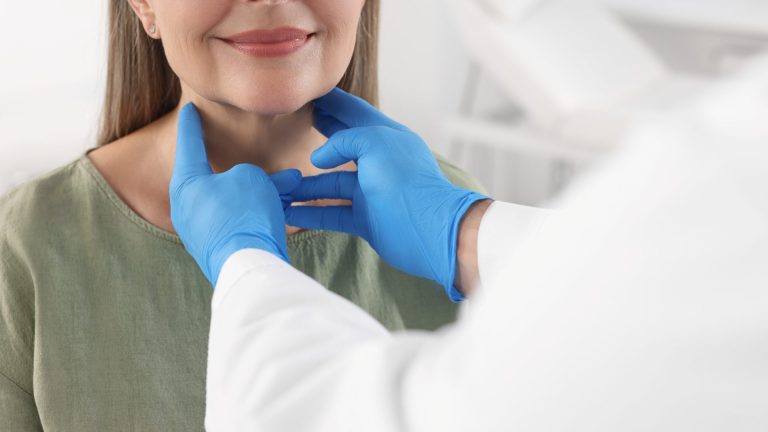
- Physical examination: The doctor feels the neck for thyroid nodules or masses and examines nearby lymph nodes.
- Imaging tests: Thyroid ultrasound: uses sound waves to create images of the thyroid gland and determine the nature of any nodules present. Also, a computed tomography (CT) scan or magnetic resonance imaging (MRI) may be performed. These tests can be used to evaluate the extent of the cancer if it is suspected to have progressed.
- Blood tests: Thyroid function tests measure the levels of thyroid hormones and thyroid stimulating hormone (TSH) in the blood, although they are not specific for cancer. Thyroglobulin, on the other hand, measures a tumor marker that may be elevated in some types of thyroid cancer.
- Fine needle aspiration biopsy (FNA): A procedure in which a fine needle is inserted into the thyroid nodule to remove cells and analyze them under the microscope. It is the most definitive test for diagnosing thyroid cancer.
- Genetic testing: In some cases, genetic testing can be performed to detect specific mutations associated with certain types of thyroid cancer.
Treatment options for thyroid cancer
Treatment of thyroid cancer depends on the type and stage of the cancer, as well as the patient's overall health. The most common treatment options include:
Surgery:
- Total thyroidectomy: Complete removal of the thyroid gland. It is the most common treatment for most thyroid cancers.
- Partial thyroidectomy (lobectomy): Removal of part of the thyroid gland, usually used for very small and confined cancers.
Radioactive iodine therapy: After surgery, some patients may receive radioactive iodine to destroy any remaining thyroid cells and reduce the risk of recurrence. Radioactive iodine is absorbed by thyroid cells, including cancerous ones, and destroys them.
Hormone therapy: After thyroidectomy, patients need hormone replacement therapy to maintain normal levels of thyroid hormones. In addition, hormone therapy can help suppress TSH production, which may stimulate the growth of remaining cancer cells.
Radioterapia externa: Utiliza rayos de alta energía para destruir células cancerosas. Es menos común en el tratamiento del cáncer de tiroides, pero puede ser utilizado en casos donde el cáncer no responde al yodo radiactivo o ha avanzado a otras partes del cuerpo.
Chemotherapy: Uses drugs to kill cancer cells. Chemotherapy is rare in the treatment of thyroid cancer, but may be used for advanced cancers that do not respond to other treatments.
Targeted therapies: Drugs that specifically target mutations or proteins present in thyroid cancer cells. These treatments are useful in advanced or metastatic cancers that do not respond to conventional therapies.
Follow-up and prognosis
Long-term follow-up is essential for patients with thyroid cancer. It includes regular physical examinations, blood tests to measure thyroglobulin levels and imaging tests to detect possible recurrences. Most patients with thyroid cancer have a good prognosis, especially when the cancer is detected early and treated appropriately.
Thyroid cancer, although relatively rare, can be effectively treated with an early diagnosis and an appropriate treatment approach. At Panama Cancer Clinic, we are committed to providing the best care and most advanced treatment options for our patients. If you have questions or need more information about our treatment options for thyroid cancer, please do not hesitate to contact us.
Meet our Medical Specialists
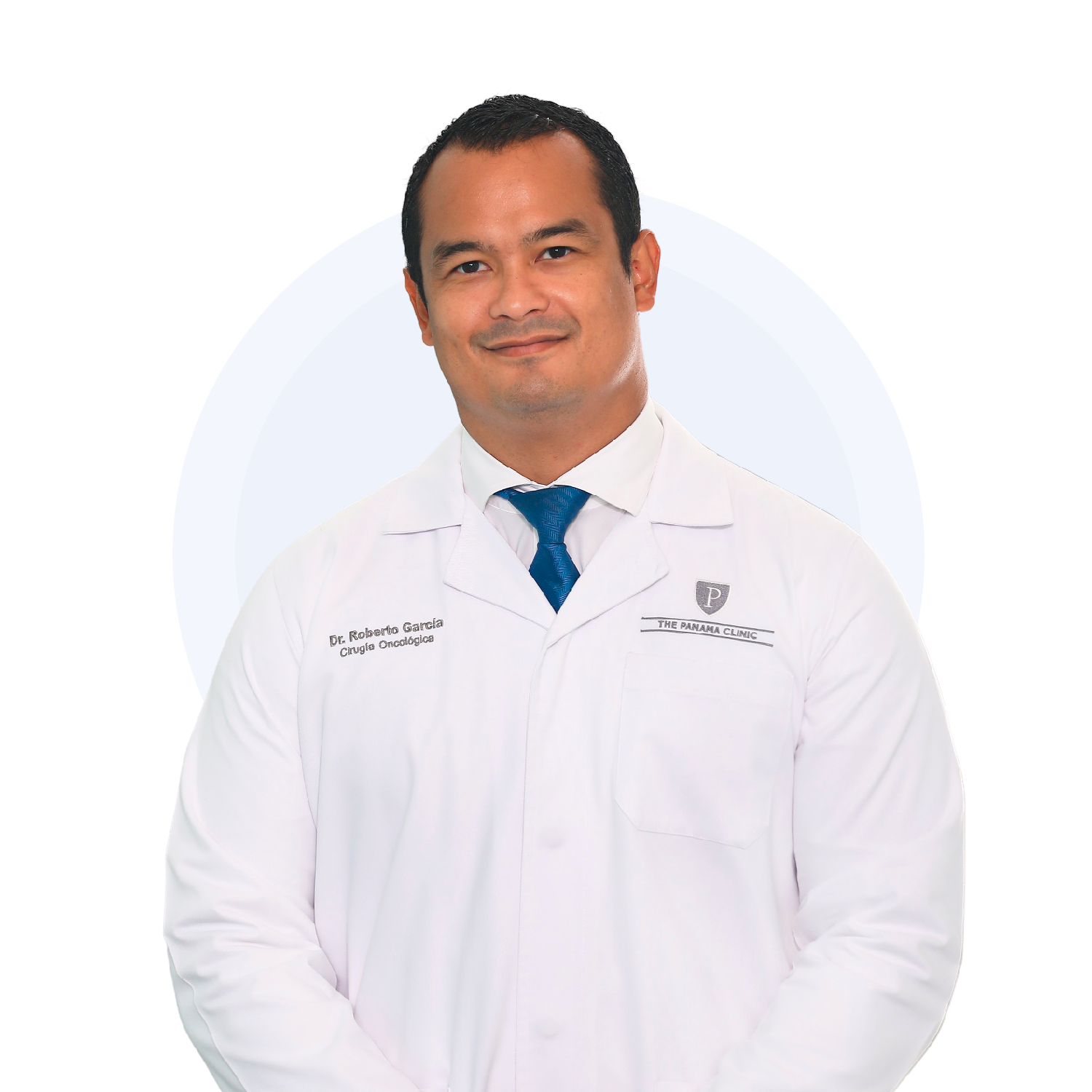
Dr. Roberto García C.
Oncology / Minimally Invasive Surgery /
Advanced Breast Surgery