Thyroid Cancer
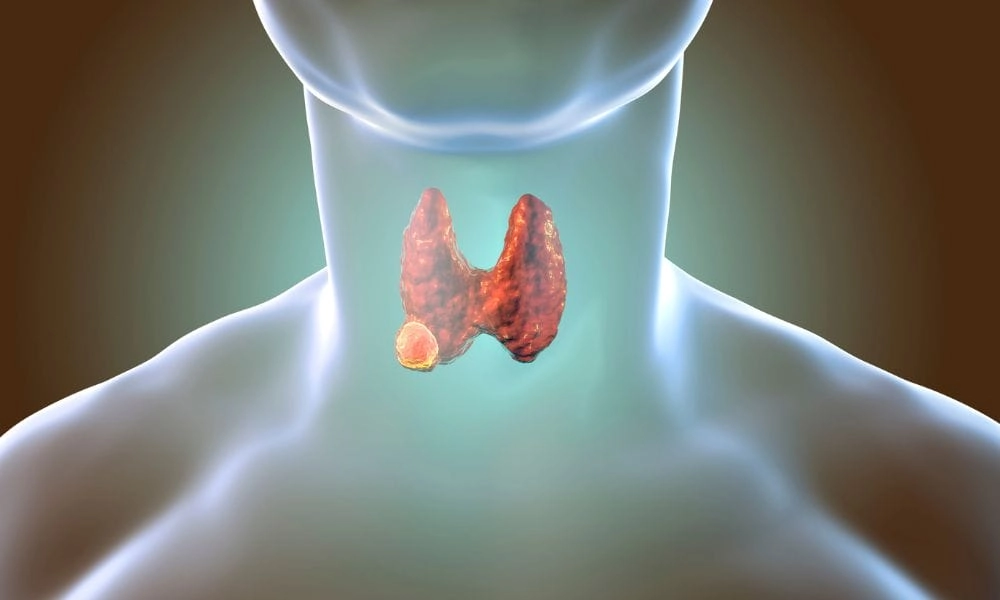
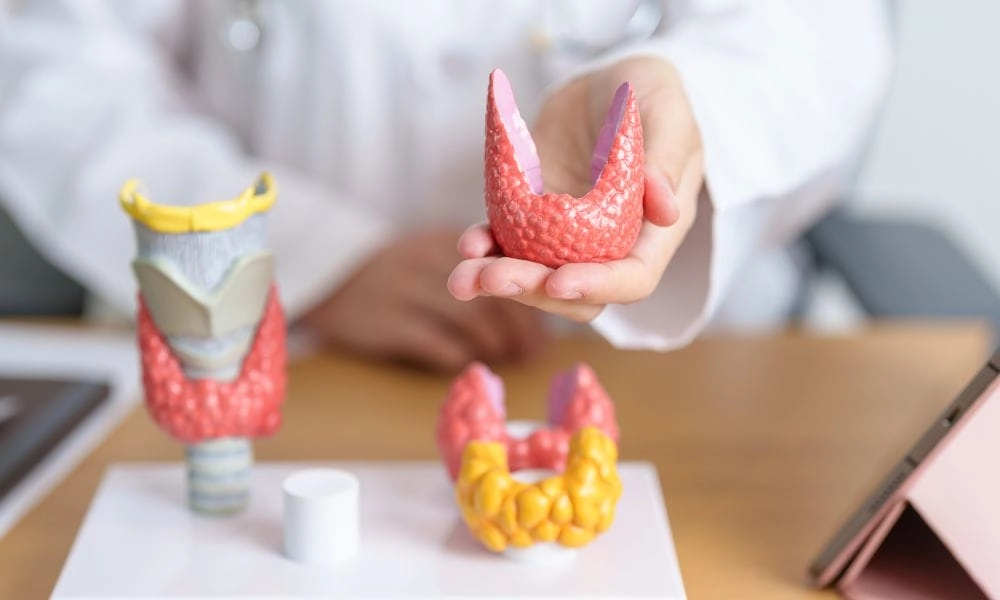
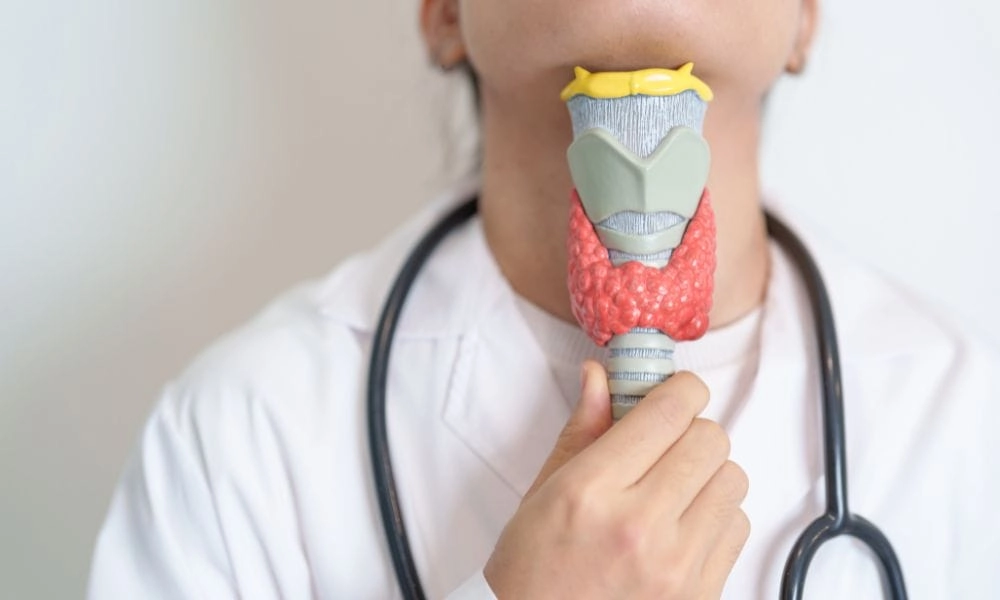
The thyroid is an endocrine gland located at the base of the neck that looks very much like a butterfly. Thyroid hormones are responsible for regulating some of the body's essential functions, including metabolism, body temperature, heart rate, and blood pressure.
A medical team that will help you overcome all odds
When a tumor is detected and treated early, life expectancy rates are very encouraging for certain types of thyroid cancer. Our oncology specialists are ethically committed to finding the best possible solutions to ensure your recovery.

Women are three times more likely to develop thyroid cancer than men.

Statistics show that 1 in 5 patients with thyroid cancer has a history of hypothyroidism.

Diagnosis and Staging
We offer timely diagnoses backed by the most reliable screening tests: thyroid function blood tests (TSH), biopsies, physical exams, and more.

Welfare
At every stage of the process, you will receive physical and emotional support from psychologists and nutritionists who specialize in caring for cancer patients.

The Specialist
A team of highly experienced oncologists meets to evaluate each case individually and provide a comprehensive approach tailored to the patient's needs.
What is thyroid cancer?
Thyroid cancer is a disease caused by the proliferation and invasion of abnormal cells in the tissues of the thyroid gland. The thyroid consists of two lobes (right and left) that are connected in the center by an isthmus.
Although the causes of thyroid cancer have not yet been identified, it is believed that hereditary, environmental, and physical factors play a role in its development; among the latter, we can mention being overweight and obesity.
Types of Thyroid Cancer
The thyroid gland is composed primarily of two very specific cell types: follicular cells (responsible for the production of thyroid hormones) and C cells (responsible for producing calcitonin).
Each of these cells has the potential to develop into both benign and malignant tumors; therefore, the patient's endocrine neoplasia must be accurately diagnosed in order to determine the most appropriate treatment method.
The main types of thyroid cancer include:
Differentiated cancers
Most cases of thyroid cancer fall into this category; the disease is triggered by the proliferation of follicular cells. Differentiated thyroid cancers are classified into several subtypes, including:
Papillary thyroid cancer
Also known as papillary carcinoma or papillary adenocarcinoma, it is the most commonly diagnosed differentiated thyroid cancer. These are slow-growing cancers, but they can also spread to the lymph nodes; however, with the right treatment, the medium- and long-term outcomes are usually excellent.
Follicular thyroid cancer
Unlike papillary cancer, adenocarcinoma or follicular thyroid carcinoma does not spread to the lymph nodes in the neck. In advanced stages, this disease tends to spread to more distant sites, such as the bones and lungs; and although this may not seem encouraging, it is worth noting that the chances of survival in these cases are quite favorable.
Hurthle cell carcinoma
This tumor accounts for only 3% of all thyroid cancers, so it is considered one of the least common types. However, it is a very aggressive cancer that spreads rapidly and exhibits changing behavior in response to different cancer treatments, which makes clinical management more complex.
Spinal Cancer
It is a cancer that originates in the C cells and can spread to the lymph nodes as well as the liver and lungs; detection and treatment can be difficult. Medullary thyroid cancer (MTC) has two subtypes: sporadic MTC (non-hereditary) and familial MTC (hereditary).
Anaplastic thyroid cancer
Of all thyroid cancers, this is undoubtedly the most aggressive; its high invasiveness exceeds the effectiveness of most medical treatments. Women over the age of 60 are the most likely to develop it.
Contact us at
. Schedule an appointment
Request a consultation

Symptoms of Thyroid Cancer
The early stages of the disease may occur without any obvious symptoms; however, as the disease progresses, the patient may begin to notice the following:
A thyroid nodule that can be felt.
A sensation of pressure or suffocation in the structures of the neck.
Changes in the tone of voice (a deeper, hoarse, or rougher voice).
Difficulty swallowing food.
Inflammation of the lymph nodes in the neck.
Constant pain and discomfort in the neck and throat.
Risk Factors
Patients with thyroid cancer, regardless of the type, share one or more of these risk factors:
Gender: Although the reasons are medically unknown, worldwide statistics show that thyroid cancer occurs three times more often in women than in men.
Inheriting an abnormal gene or other genetic syndrome from a first-degree relative.
A deficiency or excess of iodine in the body.
Radiation exposure: Previous radiation treatments to areas such as the neck and head increase the risk of developing thyroid cancer in the future.
Overweight or obese: Multiple studies indicate that people with a higher body mass index are more susceptible to the disease.
Non-surgical medical alternatives
Active surveillance: Some patients with small cancers may live with the disease for a long time without it growing or spreading; in these cases, the oncologist may recommend periodic checkups throughout the year to closely monitor any changes.
Hormone therapy: This treatment involves replacing or supplementing the hormones produced by the thyroid; its purpose is to restore hormonal balance after surgery or, if that is not possible, to stop the excessive production of TSH.
Radioactive iodine: The controlled intake of radioactive iodine allows for the destruction of cancer cells when they directly absorb the substance. This option is more commonly used and effective for the treatment of differentiated cancers.
Alcohol ablation: Using ultrasound guidance, the tumor is located and an alcohol solution is injected to shrink the cancer cells. Alcohol ablation is mainly used for small tumors in the thyroid or lymph nodes.
Selective drugs: In selective therapy, drugs are administered to block certain chemicals that are essential to cancer cells.
Radiation therapy: During radiation therapy, the patient is exposed to high-powered X-rays directed at the neck to destroy cancer cells.
Chemotherapy: This treatment involves administering specific chemicals that travel through the bloodstream to eliminate all traces of cancer cells.
Thermal tumor ablation: The application of extreme heat and cold has proven to be very effective in inducing cell death, especially when thyroid cancer has spread to other organs such as the lungs and liver.
Palliative care: This type of complementary medical care focuses on improving the quality of life for cancer patients with aggressive cancer.
Surgical methods
Surgery: Surgery can be used to partially or completely remove thyroid nodules. The most common procedures include: thyroidectomy (complete removal of thyroid tissue), thyroid lobectomy (removal of half the gland), and lymph node dissection.
Thyroid Cancer Prevention
Of all the known risk factors, only two can be modified. The following are our recommendations in this regard:
Maintain a controlled iodine intake: Iodine is closely linked to thyroid cancer. An excess of this element can be just as harmful to health as a deficiency.
Protect your thyroid from ionizing radiation: If you need to undergo radiation therapy to treat another condition or must have radiological tests, ask your doctor what steps you can take to protect your thyroid gland from these effects.