Oncological Interventionism
What is defined as minimally invasive imaging treatment is an effective therapy to alleviate and even cure cancer.
Less painful and debilitating treatment
Thanks to interventional oncology, the number of patients who make use of this specialty is increasing every day, obtaining the best results.
The treatment is targeted and acts specifically on the tumor, making the adverse effects of the drugs almost imperceptible.
Recovery is much faster and less painful when compared to other alternative treatments.
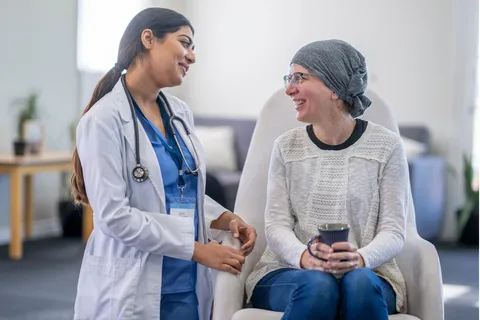

Feasibility assessment
Based on the evaluation of the patient, it will be possible to determine the feasibility of certain procedures, from biopsies to other minimally invasive treatments.

Increased vitality
Since the treatment produces fewer side effects, reduces weakness and fatigue; the patient will renew his energy to continue his process.

The Specialist
He is part of the multidisciplinary team that studies tumors, seeking the application of precise onco-interventional treatments in search of a solution.
FAQs
Tumor embolization
In particular, there are cases in which it is necessary to intentionally block certain blood vessels to prevent regular flow to them.Undoubtedly, this is a procedure that helps to control certain bleeding and, in the case of oncology patients, prevents the flow of blood to the tumor.
This is why catheterization can be used to obstruct an artery with great precision for therapeutic purposes. In this sense, it is possible to identify 3 groups of patients who are candidates for embolization:
- Oncologic embolization. Targeted to the tumor in a specific way; it usually has a palliative function, but in some cases it can also delay its growth. There are 2 types within this range:
- Hepatic chemoembolization.
- Radioembolization with Itrium-90.
- Pre-surgical embolization. It helps to control bleeding during surgery when tumors are very large or have multiple vascularizations.
- Palliative embolization. Refers to the application of this technique to control the symptoms present for the benefit of the patient.
- Tumor ablation.
In any case, the damage that this technique causes on the tumor tissue makes it a very effective therapy that in some patients can even be curative and in most cases, it is combined with chemotherapy and/or surgery.
Obviously, the most frequent way to apply this method is by percutaneous technique, which reduces recovery time and possible complications.
Accordingly, some of his best-known techniques include:
- Radiofrequency.
- Microwave.
- Laser.
- Cryopreservation.
- Irreversible electroporation.
Vascular and non-vascular diagnostic procedures
- Diagnostic phlebography (selective and non-selective).
- Diagnostic arteriography (selective and non-selective).
- Hormone samples.
- Percutaneous vascular studies.
- Biliary and urological diagnostic procedure.
- Biopsies.
Therapeutic vascular interventionism
- Angioplasties.
- Percutaneous atherectomy .
- Embolectomy.
- Thrombectomy.
- Vascular endoprosthesis.
- Local fibrinolysis.
- Central line for chemotherapy.
- Stent in tumor obstructions (vena cava and/or iliac vein).
Non-vascular therapeutic interventionism
- Gastrostomy.
- Lymphography.
- Ureteral prosthesis.
- Biliary prosthesis.
- Digestive tract prosthesis.
Neurovascular interventionism
- Neurodiagnosis.
- Neurointerventionism.
- The simplicity of most of these procedures and the use of minimally invasive techniques, provides an excellent receptivity among patients; who take advantage not only of its therapeutic efficacy, but also the improvements it produces for their well-being and quality of life.
- Interventional oncology helps to achieve highly accurate diagnoses; including results with a high degree of assertiveness, showing tumors that can be subsequently treated with the greatest precision.
- Finally, the treatment of tumors with this type of specialty provides the confidence that the patient needs, together with the achievement of evident results in the short and medium term.