Biopsy
It is a diagnostic test used to directly identify or rule out the presence of various diseases. At Panama Cancer Clinic, the biopsy is part of a comprehensive medical approach focused on diagnostic accuracy, safety, and patient support throughout the entire process.
Analyzing Cells and Tissues
Biopsies are the first course of action when abnormal cells or tissues appear in the human body.
Treatment approaches vary depending on the clinical needs of each patient.
It is the most accurate way to diagnose the onset of cancer cells early.

Minimally invasive
A quick blood test will provide the information needed to identify the type of condition, prioritizing your comfort and optimal recovery.

Efficient results
We deliver accurate results within a few days—analyzed by expert pathologists—so you can get clarity without having to wait any longer.

The Specialist
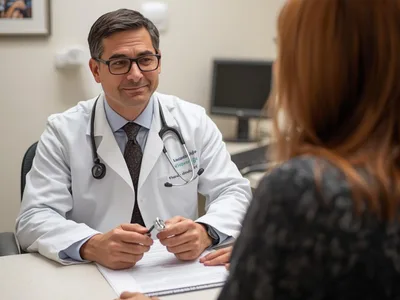
We are more than just doctors; we are a team that supports you and provides a clear, comprehensive, and reliable assessment and interpretation.
What is a biopsy?
A biopsy is a medical procedure in which a small tissue sample is removed for laboratory analysis. This test enables the detection of changes in cells, the analysis of lesions, and the investigation of inflammatory and infectious processes, as well as autoimmune diseases and other medical conditions. It also helps diagnose cancer when there is clinical suspicion.
A biopsy provides important information about the nature of a lesion and helps doctors determine the most appropriate diagnosis and treatment for each patient, based on their specific clinical condition.
Biopsy Procedure at the Panama Cancer Clinic
Biopsies at the Panama Cancer Clinic are performed in accordance with rigorous medical protocols to ensure patient safety and comfort.
Evaluation and Preparation The doctor performs a medical evaluation before the procedure. The patient's medical history and current medications are reviewed, and the patient is given specific instructions.
Procedure
The biopsy is an outpatient procedure that takes only 15 to 45 minutes. Thanks to local anesthesia, it is almost painless and allows you to go home the same day with minimal discomfort.
Recovery and Aftercare
A biopsy is safe, and recovery is quick when performed by trained specialists. All that is needed is simple aftercare and following the doctor's instructions regarding the treated area.
Biopsy Results
Results are typically available in less than a week. To provide a comprehensive diagnosis, our pathology specialist will evaluate each test.
Contact us at
. Schedule an appointment
Request a consultation
Types of Biopsies
Prostate biopsy
Evaluation of Prostate Tissue in the Presence of Suspicious Clinical Findings.
More informationProcedures Used for Taking Biopsies
The method used to collect samples for testing will depend on the area of the body where the condition is located. Below, we will provide more information on some of the most common procedures:

Needle biopsies
These include most of the tests performed on the breast, lymph nodes, or thyroid, and are divided into:
- Fine-needle biopsy: This procedure involves inserting a long, thin needle into the suspicious area. This allows fluid and cells to be extracted for later analysis.
- Core needle biopsy: A larger needle with a special tip is used, allowing the specialist to make an incision to obtain a small tissue sample.
- Vacuum-assisted biopsy: A suction device is used to increase the volume of the sample to be extracted. This significantly reduces the number of needle insertions.
- Image-guided biopsy: This procedure combines two techniques—needle biopsy and diagnostic imaging (such as computed tomography, X-ray, magnetic resonance imaging, or ultrasound)—to reach the exact target site. This technique is primarily used to identify abnormalities in hard-to-reach internal areas, such as the liver, prostate, or lung.

Curettage biopsy
For a scraping biopsy, the physician uses a small, sharp instrument to scrape the skin. He or she can then take a skin sample from the lesion for evaluation.

Needle biopsy
It is a method designed to extract samples from the deepest layers of the skin. This is achieved using a circular tool specifically designed for this purpose.

Incisional biopsy
In this case, the physician will make an incision with a scalpel to remove a sufficient amount of skin for analysis. Depending on the size of the specimen, a few stitches will likely be needed to close the wound.

Excisional biopsy
It is used to completely remove a tumor or nodule. It usually requires local anesthesia before the procedure and suturing afterward.

Endoscopic biopsy
An endoscope is a thin, flexible instrument that allows access to and the collection of samples from the internal structures of the human body. Depending on the location of the affected area, the endoscope may be inserted through the mouth, the rectum, or the urinary tract; for this reason, sedatives or anesthetics are often administered before the procedure.

Cystoscopy
This type of procedure allows for the examination of the lining of the bladder and the urethra by inserting a hollow tube called a cystoscope into the urethra.

Surgical biopsies
This is a doctor's last resort, and it is used when it is impossible to obtain results through any of the biopsies mentioned above, or, alternatively, when those biopsies have not yielded 100% conclusive results.
Where to Get a Biopsy in Panama
If you're looking for a place to have a biopsy in Panama City, at our specialized medical center you'll find a team of professionals who will support you from the initial evaluation through the delivery of your results. Each case is evaluated individually, with clear explanations of the procedure and the care required at every stage.
The biopsy is performed in a safe environment by trained specialists, with a focus on your well-being. In addition to providing a reliable diagnosis, at Panama Cancer Clinic we make it a priority to ensure that you feel informed, supported, and at ease throughout the entire process.
Request more information
Frequently Asked Questions
A biopsy is a medical procedure that involves taking a sample of cells or tissue from the body for analysis in a laboratory. This helps the doctor determine the nature of an abnormality or lesion more accurately.
A biopsy is performed by medical specialists, such as oncologists, surgeons, or other trained professionals, who have the necessary experience to evaluate the case and perform the procedure safely and appropriately.
Some of the most common areas are:
Breast
A breast biopsy is a procedure in which a small sample of breast tissue is removed for analysis to determine whether or not cancer is present. It is important to remember that breast cancer is the most common type of cancer and the leading cause of death among women.
Thyroid
This type of thyroid biopsy is performed using specialized needles and is carried out when tumors or lesions are visible on the skin. In certain cases, it is often combined with diagnostic imaging procedures such as X-rays, which provide a more precise understanding of the affected area that needs to be accessed.
Prostate
A prostate biopsy is used to collect small samples of prostate tissue to look for signs of cancer. This procedure may be ordered when there are abnormalities in the rectal tract or when PSA levels are higher than normal.
Skin
A skin biopsy can be used to diagnose both skin diseases and the most common bacterial or fungal infections, including basal cell carcinomas, carcinomas, melanomas, psoriasis, eczema, and other types of skin cancer.
Skin cancer is often a rather insidious disease, so you should see a doctor as soon as possible if you notice the sudden appearance of spots, warts, or moles.
Cervix (cervix)
In this procedure, a tissue sample is taken from the cervix for analysis to determine whether there are any abnormal conditions, precancerous changes, or cervical cancer. This type of cancer is the second most common among women.
A cervical biopsy is usually performed when abnormalities are found during a pelvic exam, when Pap smear results are abnormal, or when a woman tests positive for high-risk human papillomavirus (HPV).
Another important fact about biopsies is that they provide information about how aggressive the cancer is (cancer grade). The lowest grade, or grade 1, is the easiest to treat and has the lowest rate of spread; as the grade increases, so does the cancer’s spread throughout the body and its level of aggressiveness.
During surgical procedures, the pathologist will evaluate the specimen immediately and provide the results to the surgeon within minutes. In less urgent situations, the results will be available within a few days.
When undergoing a biopsy, it is always important to ask the treating physician how long it will take to receive the test results. Maintaining a calm and positive attitude can be the key to successfully overcoming any situation that may arise from now on.
The cost of a biopsy in Panama can vary depending on the type of biopsy, the complexity of the procedure, the area to be examined, and the necessary laboratory tests. For this reason, the cost is determined after a preliminary medical evaluation.