Breast cancer is the most common type of cancer and the most common cause of cancer death in women worldwide, according to the World Health Organization (WHO). Knowing the risk factors, symptoms and treatment options is crucial for early detection and effective management of this disease.
Not only is this disease the leading cause of disability-adjusted life years lost in women, but it also has a disproportionate impact in developing countries. In these regions, the majority of breast cancer deaths occur prematurely in women under the age of 70.
Breast cancer occurs when cells in the breast begin to grow in an uncontrolled manner. Although it is more common in women, men can also develop this disease. There are several types of breast cancer, with infiltrating ductal carcinoma being the most common. Early detection is vital, as it significantly increases the chances of successful treatment and long-term survival.
Risk factors for breast cancer
Being female is the main risk factor for breast cancer. Approximately 99% of breast cancer cases affect women, and between 0.5% and 1% of cases affect men. The treatment of breast cancer in men follows the same principles as for women. Understanding the risk factors can help identify those who are most likely to develop breast cancer and take appropriate preventive measures.
- Age: The risk of breast cancer increases with age, being more common in women over 50 years of age.
- Family history: Having close relatives with breast or ovarian cancer increases the risk.
- Genetic mutations: Mutations in the BRCA1 and BRCA2 genes are associated with an increased risk of breast cancer.
- Reproductive history: Early menstruation (before age 12) or late menopause (after age 55) increase the risk, as well as not having had children or having had the first child after age 30.
- Exposure to hormones: Prolonged use of hormone therapy for menopause and the use of oral contraceptives.
- Lifestyle: Alcohol consumption, obesity and lack of physical activity are associated with increased risk.
Symptoms of breast cancer
Symptoms of breast cancer can vary, and some people may have no symptoms in the early stages. It is essential to be alert to any unusual breast changes and seek medical attention if any of the following signs are observed:
- Breast or armpit lump: A new lump or mass in the breast or armpit that does not go away.
- Change in breast size or shape: One breast that looks different from the other or changes in shape.
- Nipple discharge: Unusual discharge, especially if bloody or clear.
- Breast skin changes: Redness, dimpling, or thickening of the breast skin.
- Breast or nipple pain: Persistent pain in the breast or nipple with no apparent cause.
Diagnosis of breast cancer
Early diagnosis of breast cancer is crucial to increase the chances of successful treatment. The main tools for diagnosis include:
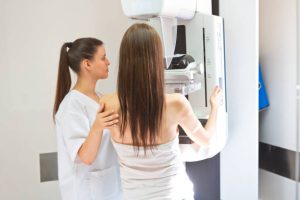
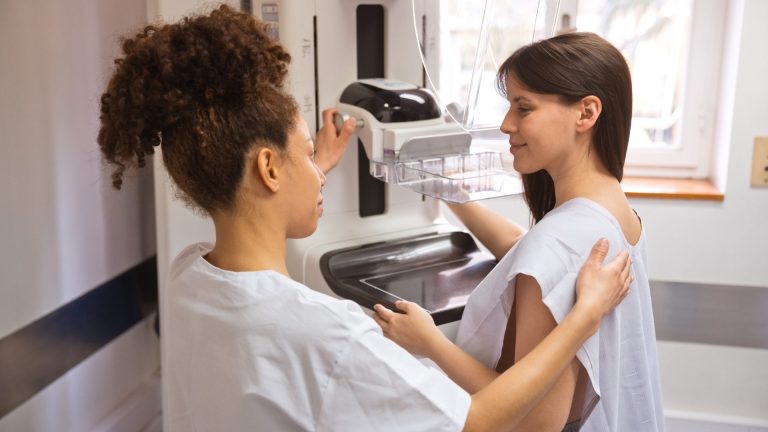
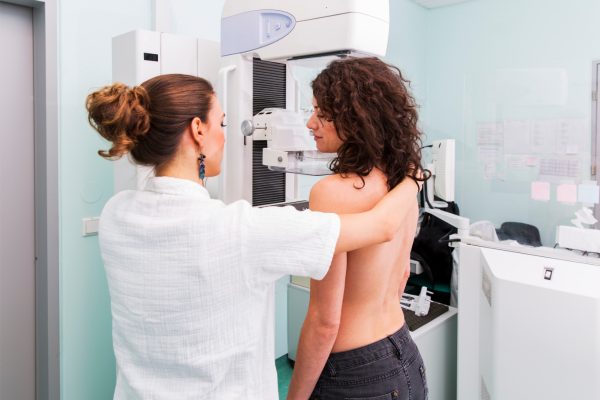
- Mammography: Mammography is an x-ray of the breast that can detect small tumors that cannot be felt.
- Breast ultrasound: Uses sound waves to create images of the inside of the breast and is useful for evaluating masses found on mammography.
- Breast magnetic resonance imaging (MRI): Uses magnets and radio waves to create detailed images of the breast, especially useful for women at high risk.
- Breast biopsy: Removal of a sample of breast tissue for analysis under a microscope to confirm a diagnosis of cancer.
Treatment options for breast cancer
Treatment of breast cancer depends on the type and stage of the cancer, as well as the patient's overall health. The most common treatment options include:
- Surgery:These include procedures such as lumpectomy, which is the removal of the tumor and a small amount of surrounding tissue; and mastectomy, which involves the removal of the entire breast, and in some cases, also the nearby lymph nodes.
- Radiation therapy: Use of high-energy rays to destroy cancer cells and reduce the risk of recurrence.
- Chemotherapy: Use of drugs to destroy cancer cells, which may be administered before (neoadjuvant) or after (adjuvant) surgery.
- Hormone therapy: Blocks hormones that promote breast cancer growth in some specific types of cancer.
- Targeted therapy: Use of drugs that specifically target proteins or genes involved in cancer growth.
- Immunotherapy: Stimulates the body's immune system to fight breast cancer.
Prevention and early detection
In 2022, 2.3 million cases of breast cancer were diagnosed in women worldwide, and 670,000 deaths from the disease were recorded. Breast cancer affects women of any age from puberty onwards in every country in the world, but rates are higher among adult women.
Breast cancer prognosis has improved dramatically in high-income countries, with a 40% decrease in breast cancer mortality (age-standardized) between 1980 and 2020, thanks to the implementation of early detection programs and standardized treatment protocols.
However, early detection and access to effective treatments remain a challenge in resource-limited countries, despite the existence of proven, cost-effective interventions. It is crucial that these interventions are implemented to achieve substantial improvements in overall breast cancer control【Source: WHO】
Breast cancer prevention includes measures such as maintaining a healthy lifestyle, limiting alcohol consumption, avoiding prolonged hormone therapy and exercising regularly. In addition, monthly breast self-examination and regular mammograms can help detect cancer in its earliest stages.
El cáncer de mama es una enfermedad seria, pero con la detección temprana y el tratamiento adecuado, las posibilidades de recuperación son altas. En Panama Cancer Clinic, estamos comprometidos a ofrecer el mejor cuidado y las opciones de tratamiento más avanzadas a nuestros pacientes. Si tienes preguntas o necesitas más información sobre nuestras opciones de detección y tratamiento para el cáncer de mama, no dudes en contactarnos.
Specialists: