Endoscopy
Specialized diagnosis and treatment that allows specialists to visualize the inside of the body using an instrument called an endoscope.
What is Endoscopy?
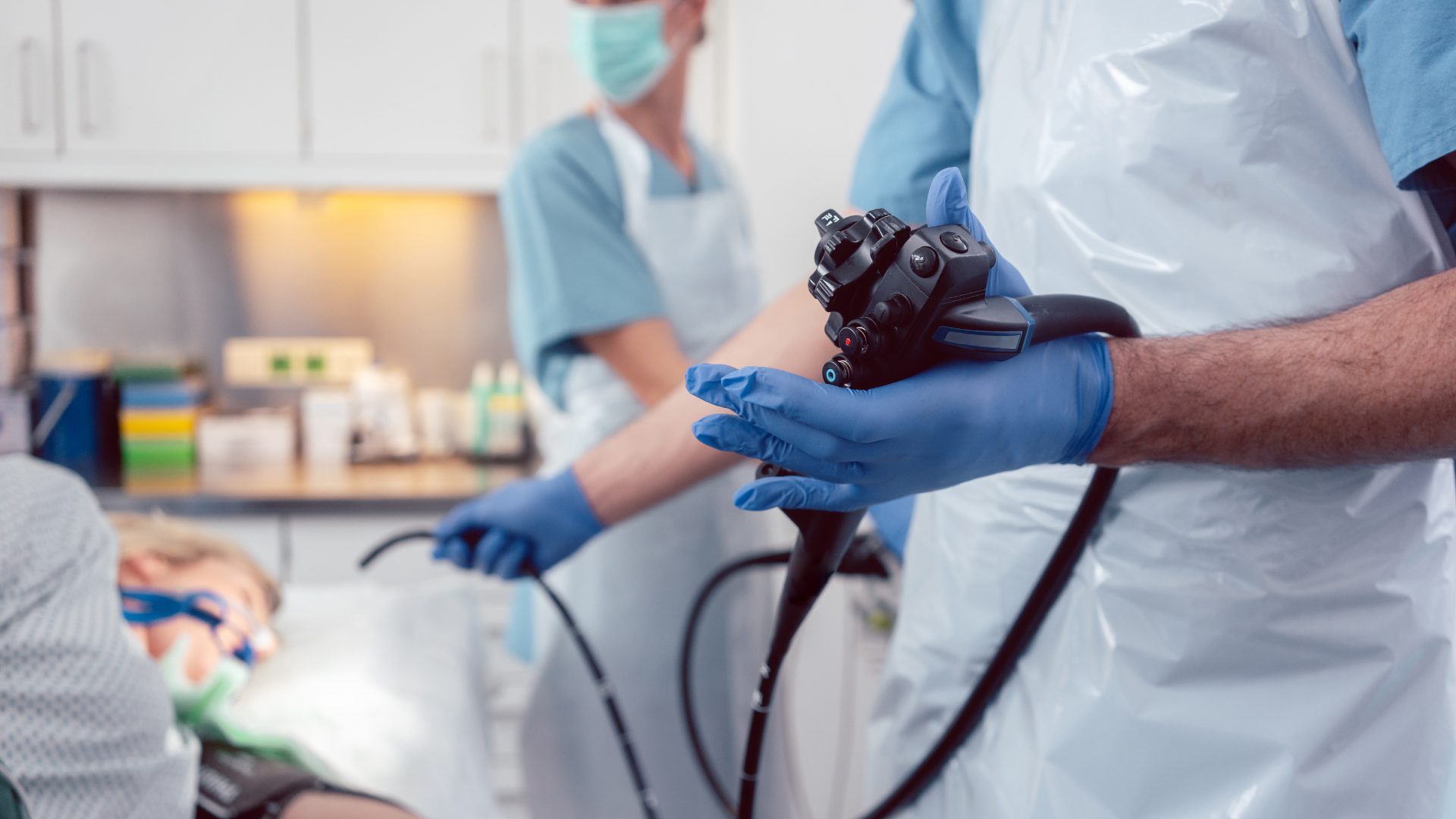
Upper endoscopy, also known as upper gastrointestinal endoscopy, is a medical procedure that allows visual examination of the upper part of the digestive tract. It is performed using an endoscope, a long, flexible tube with a tiny camera at the end, which transmits images in real time to the specialist.
At Panama Cancer Clinic, this procedure is performed by gastroenterology specialists in order to diagnose and, in some cases, treat various conditions affecting the esophagus, stomach and duodenum.
The medical term for this study is esophagogastroduodenoscopy (EGD) and can be performed in a specialized office, an outpatient surgical center or a hospital, depending on the patient's needs. In our clinic, we have advanced technology and a highly trained medical team to ensure a safe and accurate procedure.
Benefits of undergoing an Endoscopy at Panama Cancer Clinic
Advanced technology for efficient diagnostics
At Panama Cancer Clinic, we have state-of-the-art equipment that guarantees clear and precise images, facilitating a fast and reliable diagnosis.
Multidisciplinary team of specialists
Our team is composed of experts in gastroenterology, oncology, radiology and surgery, collaborating to offer the best care plan for each patient.
Comprehensive patient care
We provide a comprehensive approach, ranging from initial evaluation to post-procedure follow-up, ensuring that each patient receives the necessary support at every stage of their treatment.
Modern and comfortable facilities
Our facilities are designed to provide a comfortable and safe environment, with well-equipped procedure rooms and welcoming waiting areas.
Contact us at
. Schedule an appointment
Request a consultation
Schedule Your First Consultation Today
Don't wait any longer to take control of your health— schedule your first consultation today! Contact us and let us guide you on the path to a healthier life.
CONTACT USEndoscopy: specialized diagnosis and treatment
Why is a digestive endoscopy performed?
Upper endoscopy is used to diagnose and, in some cases, treat various conditions affecting the upper digestive tract, including the esophagus, stomach and duodenum (the first portion of the small intestine). At Panama Cancer Clinic, our gastroenterology specialists can recommend this procedure for:
Symptom evaluation
Endoscopy allows to identify the cause of digestive signs and symptoms such as:
- Stomach acidity
- Nausea and vomiting
- Persistent abdominal pain
- Difficulty swallowing (dysphagia)
- Gastrointestinal Bleeding
Diagnosis of diseases and conditions
During endoscopy, it is possible to perform a biopsy (tissue sampling) to test for conditions that may cause:
- Anemia
- Inflammation or infections
- Digestive bleeding
- Chronic diarrhea
- Early detection of some types of cancer of the digestive system
Minimally invasive treatments
The endoscope also allows therapeutic intervention without the need for open surgery. Through specialized tools, it is possible to perform procedures such as:
- Bleeding control: Cauterization of bleeding blood vessels.
- Esophageal dilatation: Widening of a narrowed esophagus due to stricture.
- Removal of polyps: Removal of abnormal growths in the digestive mucosa.
- Removal of foreign bodies: Extraction of accidentally ingested objects.
Advanced endoscopy with high-definition imaging
In some cases, endoscopy is complemented with endoscopic ultrasound, which allows visualization of internal structures that are difficult to access, such as the pancreas and the stomach wall.
Modern endoscopes incorporate high-definition (HD) video technology and narrow-band imaging, which uses special light to improve the detection of premalignant lesions, such as Barrett's esophagus.
At Panama Cancer Clinic, we have state-of-the-art equipment and a medical team specialized in diagnostic and therapeutic endoscopy to guarantee a safe, precise and high quality procedure.
Risks and preparation for Digestive Endoscopy
Upper endoscopy is a safe procedure when performed by specialists in a controlled environment. However, as with any medical procedure, there are rare risks that should be considered. Despite its safety, some complications may occur on rare occasions:
Bleeding
The risk of bleeding is low, but may increase if a biopsy or therapeutic procedure is performed during endoscopy. In exceptional cases, bleeding may be significant and require a blood transfusion.
Infection
In most cases, the risk of infection is minimal. However, if additional procedures are performed, such as removal of polyps or esophageal dilations, the risk increases slightly. Infections are usually mild and treatable with antibiotics. In some patients at increased risk of infection, the physician may prescribe preventive antibiotics.
Perforation of the digestive tract
A tear in the esophagus, stomach or duodenum is an extremely rare complication (approximately 1 in every 2,500 to 11,000 diagnostic endoscopies). If it occurs, it may require hospitalization or corrective surgery. The risk is higher in therapeutic procedures such as esophageal dilations or polyp removal.
Reaction to sedation or anesthesia
Endoscopy is usually performed under sedation or light anesthesia for patient comfort. Although adverse reactions are rare, they may include changes in blood pressure, heart rate or shortness of breath. The medical team constantly monitors the patient to minimize any risks.
Alarm symptoms after endoscopy.
Although complications are rare, it is important to seek immediate medical attention if you experience complications after the procedure:
- Persistent fever
- Chest pain or shortness of breath
- Dark, black or bloody stools
- Difficulty swallowing
- Severe or prolonged abdominal pain
- Vomiting blood or vomit that looks like coffee grounds
If you have any of these symptoms, contact your doctor immediately or go to the emergency room.
How to prepare for a Digestive Endoscopy
To ensure a safe procedure and optimal results, the specialist will provide you with specific instructions.
Previous fasting
You should avoid solid food for at least 8 hours and liquids for 4 hours before the procedure. This is necessary to ensure that the stomach is empty and to improve visualization.
Suspension of medications
If you take anticoagulant medications, you may need to temporarily discontinue them to reduce the risk of bleeding. Management of other conditions such as diabetes, hypertension or heart disease will also be evaluated, so you should inform your doctor about all medications and supplements you take.
Recovery planning
Most patients receive sedation, which helps them relax and reduces discomfort during endoscopy. However, it is important to take precautions after the procedure:
- Do not drive: Ask a family member or friend to accompany you and drive you back home.
- Take the day off: Although you may feel alert, sedation can affect your memory, reflexes and decision making.
- Avoid important decisions: Do not make large purchases, sign contracts, or make financial or legal decisions for the next 24 hours.
What can you expect during and after a Digestive Endoscopy?
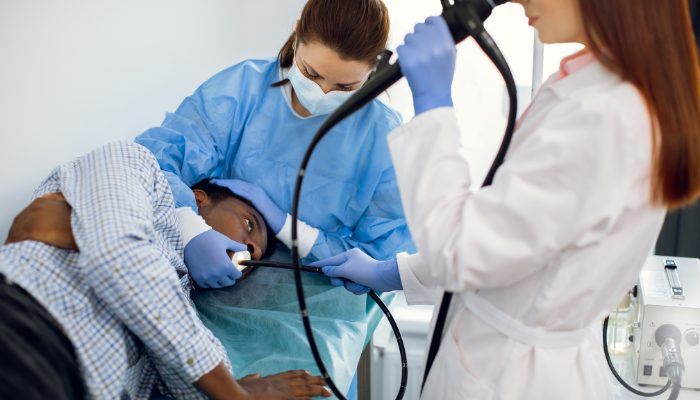
At Panama Cancer Clinic, we make sure that your procedure is as comfortable and safe as possible. Below, we explain in detail how the process will be performed. To perform the upper endoscopy, you will be asked to lie on a stretcher, either on your back or on your side. During the procedure, the medical team will take the following measures to ensure your well-being:
Constant monitoring
You will be connected to monitors to control your heart rate, blood pressure and breathing in real time.
Intravenous sedation
You will be given a sedative medication intravenously in your forearm to help you relax.
Local anesthesia in the throat
An anesthetic spray may be applied to numb the throat before inserting the endoscope. A mouth guard will also be used to keep the mouth open.
Introduction of the endoscope
The doctor will gently insert the flexible endoscope through your mouth and ask you to swallow to facilitate its passage down your throat. You may feel slight pressure, but you should not experience pain. As the endoscope moves down the esophagus, stomach and duodenum, various actions can be performed:
- Real-time visualization: A high-definition camera at the tip of the endoscope transmits images to a monitor so that the specialist can examine any abnormalities.
- Air inflation: A slight amount of air will be insufflated in the digestive tract to facilitate the displacement of the endoscope and improve the visualization of the folds of the esophagus, stomach and duodenum. You may feel a slight sensation of satiety.
- Therapeutic procedures: If necessary, the physician may pass special surgical instruments through the endoscope to perform a biopsy, remove polyps or stop bleeding.
Once the scan is completed, the endoscope is slowly withdrawn. The total duration of the procedure is usually 15 to 30 minutes.
After Endoscopy
Once the procedure is completed, you will be moved to a recovery area, where you will remain for approximately one hour while the sedative wears off. During this time, the medical team will continue to monitor your condition.
Mild symptoms after the procedure
It is normal to experience some mild discomfort after endoscopy, such as:
- Bloating and gas
- Mild abdominal cramps
- Sore or irritated throat
These symptoms usually disappear within a few hours. However, if they persist or worsen, it is important to contact your doctor.
Endoscopy Results
The delivery time of the results will depend on the reason for the procedure:
Immediate results
If the endoscopy was performed to diagnose conditions such as an ulcer, the specialist may provide you with a preliminary report at the end of the procedure.
Biopsies and additional analysis
If a tissue sample was taken for biopsy, the results may take several days, as they will be analyzed in the laboratory.
At Panama Cancer Clinic, we are committed to providing you with an accurate diagnosis and a safe procedure, and our team is available to answer all your questions and accompany you every step of the way!
Frequently Asked Questions about Endoscopy
Doctors may recommend an endoscopy if symptoms such as the following are present:
- Persistent abdominal pain
- Gastrointestinal Bleeding
- Difficulty swallowing
- Chronic cough with no apparent cause
In addition, it is a key tool in the early detection of cancer and other serious diseases.
In addition to its diagnostic role, endoscopy offers numerous therapeutic benefits, enabling minimally invasive procedures that significantly improve patient care.
- Accurate diagnosis: Provides detailed images to identify medical conditions.
- Minimally invasive procedure: Reduces risk and recovery time.
- Therapeutic procedures: This allows for treatments such as polyp removal or biopsy collection to be performed during the same procedure.
During the endoscopy, the patient may be given sedation to minimize discomfort. The procedure is usually brief, and recovery is quick. After the procedure, you may experience mild symptoms such as swelling or discomfort in the throat, which go away quickly.