Endometrial Cancer
Endometrial cancer is one of the most common gynecologic cancers in women, accounting for approximately 6% of all neoplasms diagnosed in this group.
Caring for women's health from multiple angles
Endometrial cancer is a disease that affects a large number of women worldwide; therefore, it is of great importance to have specialized treatment that provides comprehensive and personalized care. At our center, we understand this disease like no one else and, as such, we are committed to providing exceptional care to each patient.

Endometrial cancer has a higher incidence in women over 50 years of age; however, it can also affect younger women.

Although the mortality rate varies according to the stage of the disease, it is estimated that about 8% of women diagnosed with endometrial cancer die from the disease.

Diagnosis and Staging
Our specialists use advanced diagnostic techniques to identify the presence and extent of the cancer. Proper staging allows us to personalize the patient's treatment and improve her prognosis.

General Welfare
We provide a comprehensive approach ranging from medical treatment to emotional support and nutritional care. Our multidisciplinary team works together to provide the best possible care.

The Specialist
Staffed by highly trained and experienced specialists in the treatment of this disease, we offer a personalized, effective and compassionate approach.
What is endometrial cancer?
Endometrial cancer is a type of cancer that originates in the inner lining of the uterus, known as the endometrium. This lining thickens monthly during the menstrual cycle and is removed during menstruation. However, in some cases, endometrial cells can grow abnormally and develop into cancer.
Types of endometrial cancer
There are several subtypes of endometrial cancer, the most common being endometrioid adenocarcinoma. Other less frequent subtypes include:
Clear cell carcinoma.
Papillary serous carcinoma.
Mucinous carcinoma.
Symptoms of endometrial cancer
Symptoms of endometrial cancer can vary, but it is important to pay attention to the following warning signs:
Abnormal uterine bleeding.
Bleeding after menopause.
Pelvic pain, pain during sexual intercourse.
Changes in menstrual cycle patterns.
Contact us at
. Schedule an appointment
Request a consultation

Risk Factors
Known risk factors for endometrial cancer include:
Obesity.
Diabetes.
Hormone replacement therapy.
Advanced age.
Lack of previous pregnancies.
Late menopause.
Family history of endometrial cancer.
Screening tests
The main screening tests for endometrial cancer are:
Endometrial biopsy
In which a tissue sample is extracted from the uterus for pathological analysis in a laboratory.
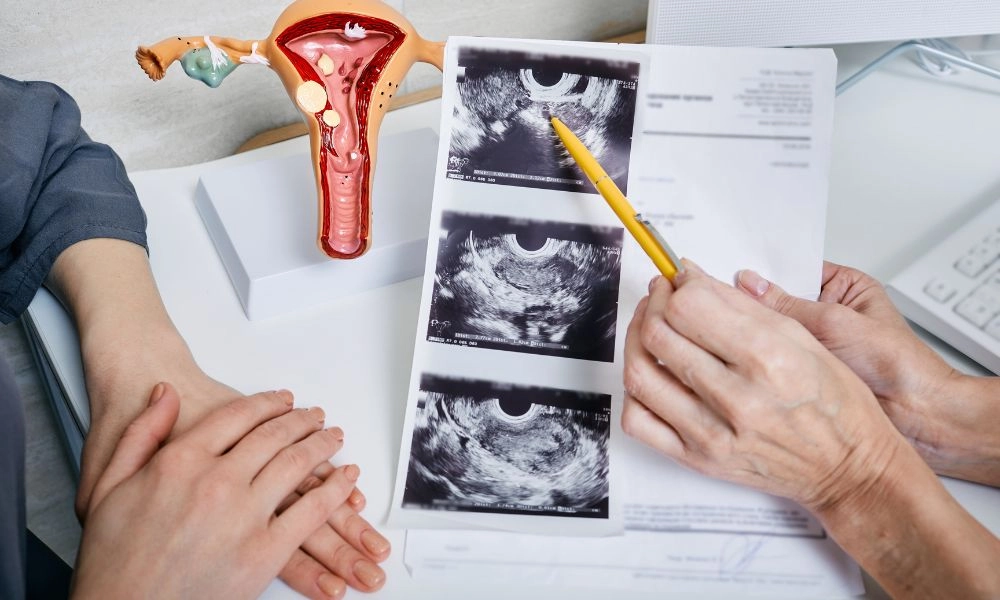
Transvaginal ultrasound
It uses sound waves to create images of the uterus and evaluate any abnormalities present.
Treatment for endometrial cancer
The goal of treatment is to eliminate and/or control the cancer, while preserving the function of the uterus and ensuring the patient's quality of life. In this regard, the treatment options are as follows:
Surgery
Surgery is one of the mainstays in the treatment of endometrial cancer. The most common procedure is hysterectomy, which involves removal of the uterus, cervix and sometimes the fallopian tubes and ovaries. Depending on the extent of the cancer, nearby lymph nodes may also be removed.
Radiation Therapy
Radiation therapy uses rays in high concentrations to destroy or inhibit the growth of cancer cells. In the case of endometrial cancer, external radiation therapy, which is directed to the affected area from an external source, or internal radiation therapy (brachytherapy), where radiation sources are placed directly into the uterus, can be administered.
Radiation therapy may be administered before surgery to reduce the size of the tumor, after surgery to eliminate any residual cancer cells, or as the primary treatment in cases where surgery is not possible.
Chemotherapy
Like radiation therapy, chemotherapy can be used before surgery, after surgery or as a primary treatment in advanced cases of endometrial cancer. Often, a combination of different drugs is used to increase the effectiveness of the treatment.
Hormone therapy
Some types of endometrial cancer are influenced by hormones, especially tumors that express estrogen and progesterone receptors. Hormone therapy is used to block or reduce the effects of these hormones on cancer growth.
Prevention
While endometrial cancer cannot be completely prevented, there are steps that can be taken to reduce the risk of developing the disease. Our recommendations include:
Maintain a healthy weight.
Exercise regularly.
Controlling diabetes.
Avoid unnecessary hormone replacement therapies.
In addition, it is important to have regular gynecological check-ups and to be attentive to the symptoms mentioned above.