Cáncer de Timo
Thymic cancer accounts for less than 1% of all cancers. While the survival rate of thymoma is relatively high, especially if detected and treated in early stages; thymic carcinoma has a lower survival rate due to its aggressive nature.
Comprehensive treatment and unconditional support
With years of experience treating oncology patients, we know that facing a thymus cancer diagnosis can be overwhelming. However, our oncologists are here to be with you every step of the way, providing top-notch medical care and the emotional support needed to face this disease with courage and hope.

Although thymus cancer can affect people of any age, it is most common in middle-aged adults.

During infancy, the thymus is responsible for the maturation of essential cells of the immune system.

>Diagnosis and Staging
Diagnosing thymus cancer at earlier stages allows for more effective intervention; which translates into a higher recovery rate.

General Welfare
Cancer affects not only the body, but also the mind and spirit. For this reason, we offer oncology psychology consultations as an integral part of our treatment.

The Specialist
Having the support of an oncology specialist is essential for the effective treatment of thymus cancer. Our oncologists are highly trained and have vast experience in the management of this type of cancer.
What is thymus cancer?
Thymus cancer is a rare disease that originates in the cells of the thymus, a gland located in the mediastinum behind the sternum. This gland is part of the lymphatic system and plays a crucial role in the development of the immune system during childhood.
Types of thymus cancer
The main types of thymus cancer are:
Thymoma:
It is the most common type of thymus cancer. Thymomas are usually slow growing and are often found in early stages, which makes them more treatable.
Thymic carcinoma:
This type is more aggressive than thymoma and tends to grow and spread more rapidly. Thymic carcinoma is less common, but more difficult to treat.
Symptoms of thymus cancer
Symptoms of thymus cancer can vary and may not be as specific as in other neoplasms, which can make early diagnosis difficult. They include:
Persistent cough.
Chest pain.
Difficulty breathing.
Muscle weakness.
Unexplained weight loss.
Night sweats.
Contact us at
. Schedule an appointment
Request a consultation

Risk Factors
Although the exact causes of thymus cancer are not completely known, some risk factors may increase the likelihood of developing this disease are:
Advanced age.
Autoimmune diseases such as myasthenia gravis.
Exposure to certain toxic chemicals.
Screening tests
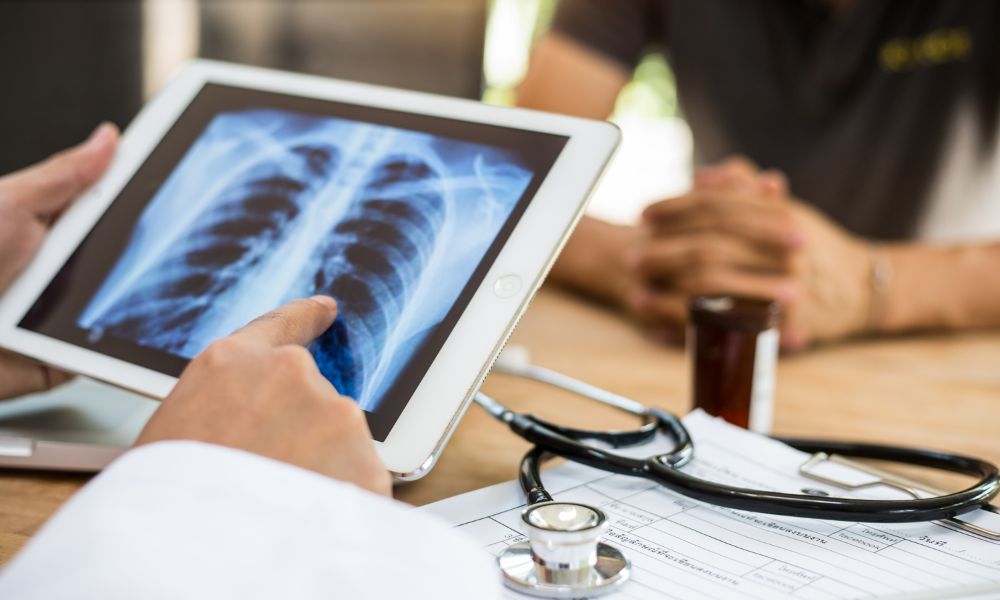
To diagnose thymus cancer, several screening tests are used; among them:
Computed tomography (CT):
It helps to visualize the thymus and detect any abnormalities.
Magnetic resonance imaging (MRI):
It provides detailed images of the thymic gland and surrounding tissues.
Biopsy
It consists of the extraction of a sample of thymus tissue for microscopic analysis.
PET Scan:
Helps identify the metabolic activity of cancer cells.

Treatment for thymus cancer
Treatment of thymus cancer may include a combination of the following options, depending on the type and stage of the cancer:
Surgery
Surgical removal of the tumor is the primary treatment for most cases of thymus cancer, especially if detected at an early stage. Depending on the size and location of the tumor, complete or partial resection of the thymus may be performed.
Chemotherapy
For thymus cancer, chemotherapy may be given before surgery to shrink the tumor, as the primary treatment to control the growth of the cancer, or after surgery to destroy any lingering cancer cells.
Radiation Therapy
Radiation therapy may be given before surgery to reduce the size of the tumor and facilitate its removal, or after surgery to destroy any residual cancer cells. It may also be used as the primary treatment in cases where surgery is not possible.
Targeted therapy
Targeted therapy is a newer treatment approach that targets specific characteristics of cancer cells. With regard to thymus cancer, certain genetic mutations have been identified that may be targets for targeted therapy. These drugs are designed to block the signals that cancer cells need to grow and divide.

Prevention
Although there is no definitive way to prevent thymus cancer, taking certain measures can reduce the risk. To do so, it is recommended:
Avoid exposure to toxic chemicals.
Maintain a healthy immune system through a balanced diet and regular exercise.
Perform regular medical check-ups to detect any abnormalities early.