Testicular Cancer
Worldwide statistics indicate that 1 in 250 men may develop testicular cancer during their lifetime. Testicular cancer is an infrequent neoplasm with a high probability of survival, provided that the patient has a successful oncological treatment.
Put your trust in the best oncologists in the country.
Testicular cancer is one of the few types of cancer that can be curable in both early and more advanced stages; this is something that the specialists at Panama Cancer Clinic will use entirely to your advantage.

Testicular cancer occurs most frequently during the male reproductive age (15 - 35 years).

Due to the great success of the treatments, testicular cancer has a mortality rate of less than 0.5%.
Diagnosis and Staging
In most cases, the patient himself discovers an abnormal lump in one of his testicles. The recommendation is to consult a physician promptly to obtain the initial diagnosis.

General Welfare
Once the neoplasm has been confirmed, our specialists in psycho-oncology will guide you and provide you with emotional support during each stage of your treatment.

The Specialist
In Panama Cancer Clinic each patient is attended by a multidisciplinary team with vast experience, which will help you successfully overcome this great challenge.
What is testicular cancer?
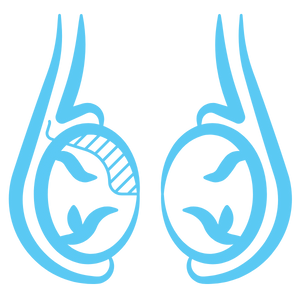
Testicular cancer is caused by the uncontrolled proliferation of malignant cells in the testicles. The testicles are a pair of sex organs located within the male scrotum, whose function is the production of hormones and sperm.
The first sign of testicular cancer is the formation of a lump or tumor in one of the testicles, since in this neoplasm the malignant cells tend to grow more rapidly.
Types of testicular cancer
Before choosing the treatment method to be used, it is essential to identify the type of testicular cancer the patient is suffering from. The most common types of testicular cancer originate in the germ cells (sperm-producing cells), these are:
Seminomas
Seminomas grow and spread more slowly than non-seminoma testicular cancer. This in turn has 2 subtypes:
The classic or typical seminoma: which mainly affects men between 25 and 45 years of age.
Spermatocytic seminoma: a rare type of cancer that occurs in men around 65 years of age.
Non-seminomas
This testicular cancer is characterized by having a much more accelerated development and dissemination than seminomas; it also occurs at a younger age, affecting young people and adults under 30 years of age. Like seminoma tumors, non-seminomas have their own classification made up of the following types:
Embryonal carcinoma: It is a fast-growing tumor with a great predisposition to spread outside the testicle.
Yolk sac carcinoma: It is the most common type of testicular cancer in infants and children, being known by other names, such as: yolk sac tumor, infantile embryonal carcinoma, orchidoblastoma or endodermal sinus tumor.
Choriocarcinoma: Testicular choriocarcinoma is rare, representing only 1% of all testicular cancers. It is more aggressive and its presence is often observed together with other non-seminoma cancers to form a mixed tumor.
Teratoma: This germ cell tumor (in its pure form) has the particularity of not increasing the levels of AFP (alpha-fetoprotein) or HCG (human chorionic gonadotropin) in the blood. Teratomas have 3 subtypes: mature teratomas, immature teratomas and somatic malignant teratomas.
Symptoms of testicular cancer
Depending on the stage, testicular cancer may manifest one or more of the following symptoms:
Presence of an abnormal lump in the testicle.
Swelling or enlargement of the testicle.
Heaviness in the scrotal area.
Genital, lumbar or inguinal pain.
Fluid accumulation in the scrotal area.
Contact us at
. Schedule an appointment
Request a consultation

Risk Factors
A risk factor is considered to be anything that increases the probability of suffering a certain disease. In the case of testicular cancer, the risk factors are:
Having cryptorchidism:
Cryptorchidism is the name given to a testicle that did not descend into place in the scrotum before birth. Men with an undescended testicle are at increased risk for testicular cancer.
Having a family history of testicular cancer:
People who are directly related to cancer patients are more likely to develop the disease.
Age:
Testicular cancer mainly affects adolescents and young adults between the ages of 15 and 35.
Skin tone:
Testicular cancer is more common in Caucasian or fair-skinned people.
Screening tests
If you come for a consultation, it is probably because you have noticed an abnormal nodule in one of your testicles. The specialist will initially perform a physical examination to palpate your testicles until the suspicious lump is found; subsequently, you will undergo other complementary tests to confirm the diagnosis, which may include:
Testicular ultrasound:
To obtain defined images of the tumor by checking its size, location and appearance.
Blood tests:
Cancerous testicular cancer cells shed proteins that can be detected through a tumor marker test.
Surgical exploration:
When the first tests are positive, the specialist may suggest an orchiectomy to remove the affected testicle and send it to the laboratory for pathological analysis; the results will determine if it is cancerous and what type of cancer it is.
Treatments for testicular cancer
Generally, testicular cancer is treated with surgery and chemotherapy. However, the specialist will also take into account factors such as your overall health, the extent of the cancer, and your personal preferences. Treatment options may include the following:
Surgery
With a radical inguinal orchiectomy, the entire testicle is removed through an incision in the groin; if your testicular cancer remained localized, this may be the only treatment you need. On the other hand, if adjacent lymph nodes must also be removed because of suspected spread, the surgeon must gain access through a belly incision (this procedure can be much riskier).
Chemotherapy
In chemotherapy, strong intravenous drugs are administered to eliminate the malignant cells that may have remained after surgery. It is important to evaluate the side effects that chemotherapy may have on the oncology patient's sperm production.
Radiation Therapy
In radiation therapy, x-ray radiation is directed at the affected area so that this energy destroys the cancer cells. This procedure can be applied especially as part of the treatment of seminoma cancer; as well as after testicular removal surgery.
Immunotherapy
Immunotherapy can be used to treat advanced testicular cancer that does not respond to other types of treatment. Immunotherapy drugs help boost the patient's immune system so that it is able to find, attack and eliminate malignant cells.


Prevention
Unlike other types of cancer, there is no measure or care that can be taken to prevent the occurrence of testicular cancer.