Cáncer de Piel
Statistics indicate that at least 3 million people are diagnosed with skin cancer around the world every year; where more than 95% of the cases correspond to the non-melanoma type. On the other hand, half of the people with positive results state that they delayed the visit to the doctor when they noticed the first symptom. This is something that should not happen!
CONTACT USA reliable space with specialized medical solutions
At Panama Cancer Clinic, you will find a haven for health with specialists who work tirelessly in the search for the most suitable treatment for your disease; aiming to overcome any prognosis.

Among all types of skin cancer, basal cell and squamous cell cancers have the best chance of cure.

Skin cancer affects men and women in equal proportion.

Diagnosis and Staging
Unlike other organs, the skin is an area with high visibility; this allows people to observe abnormal changes, go to the doctor and detect cancer early.

General Welfare
We are an active part of your recovery process, therefore, we have clinical, physical and emotional support to encourage your efforts and achievements in this difficult stage.

The Specialist
Our oncology team covers cancer treatment from different angles; for this reason, we have a very high average of successful cases.
What is skin cancer?
It is a disease caused by the uncontrollable development of abnormal cells in the skin, mainly when the skin has been exposed for a long time to sunlight.
The most common areas for the appearance of skin cancer are: the neck, arms, chest, hands, legs, ears, genitals, scalp and face, including lips, nose and eyelids.
Early detection increases the likelihood of a favorable outcome and may limit the spread of cancer before it spreads to other areas of the skin or internal organs.
Symptoms of skin cancer
The manifestations of skin cancer may vary according to the area of the skin where it is located; we should also mention that the symptoms are different for each type of cancer.
The following is a breakdown of the main skin neoplasms and their most visible characteristics:
Basal cell carcinoma:
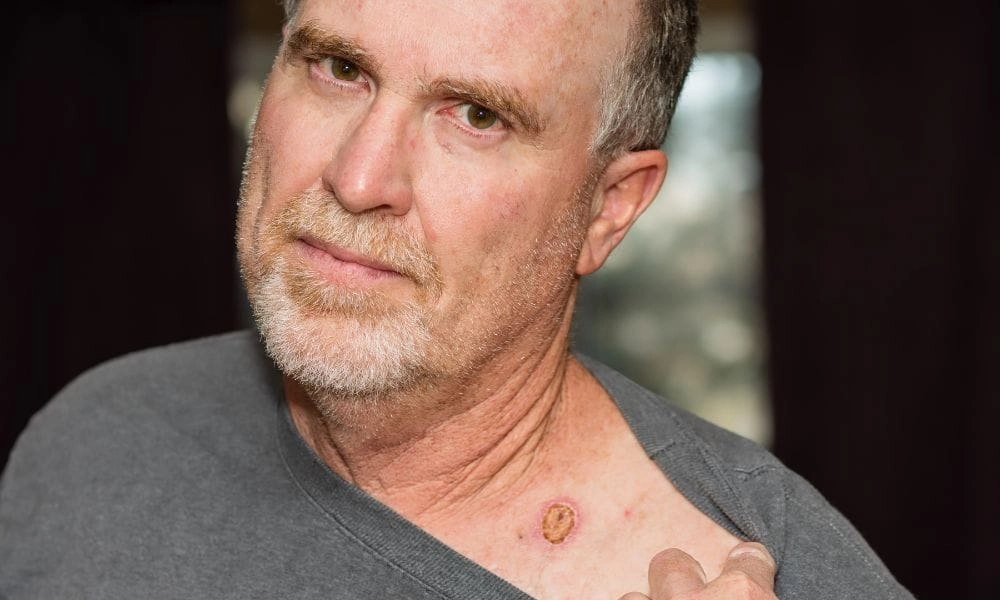
It usually occurs in areas of high sun exposure (neck and face), and can be seen as a pearly nodule, an apparently healed brown spot or an active ulcer that appears and disappears.
Spinocellular carcinoma
Again, the areas exposed to UV rays are the favorite ones for this particular type of skin cancer, among them: face, ears and hands. Spinocellular carcinoma appears as a nodular lesion, with reddened edges and a scaly appearance.
Melanoma:
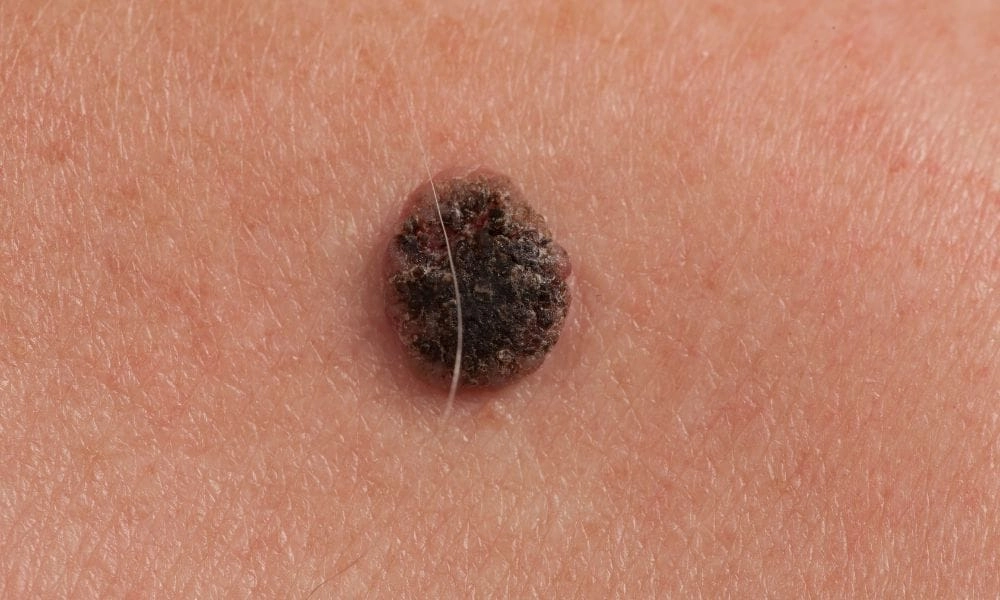
Melanomas can be found anywhere on the body exposed (or not) to sunlight, including the soles of the feet, hands and the edge of mucosal areas (mouth, nose, anus or vagina); they can also grow over an existing mole to transform it into a cancerous lesion. Melanoma has a dark, brownish appearance that spreads over a large area of skin; the lesion may generate symptoms of burning, itching and pain.
Types of skin cancer
Skin cancer is subdivided into 2 groups: melanomas and non-melanomas, the most common being basal cell carcinoma and squamous cell carcinoma, both of which are non-melanomas.
Contact us at
. Schedule an appointment
Request a consultation
Non-melanoma cancers
Angiosarcoma:
It is a rare neoplasm that originates in the lining of the lymphatic or blood vessels.
Basal cell carcinoma:
As its name suggests, this type of cancer occurs in the basal cells of the skin, which are responsible for generating new skin cells to replace those that are dying.
Squamous cell carcinoma (squamous cell carcinoma):
This cancer is generally one of the least deadly cancers; however, it is quite aggressive. Squamous cell carcinoma attacks the squamous cells of the middle and superficial layers of the skin.
Sebaceous carcinoma:
It occurs most regularly in the sebaceous glands of the eyelids, appearing as a painless, whitish or yellowish lump with reddened edges. When the sebaceous carcinoma grows it can secrete blood, fluids, etc.
Dermatofibrosarcoma protuberans:
It is an extremely unusual skin cancer that is created in the connective tissue of the dermis; it is observed as a very noticeable protuberance that grows and spreads through the skin.
Cutaneous T-cell lymphoma:
This neoplasm alters the normal functions of T lymphocytes (white blood cells) and causes them to attack the skin internally.
Cutaneous B-lymphocyte lymphoma:
Very similar to the previous point, this disease creates abnormalities in the white blood cells, but this time in the B lymphocytes. Cutaneous lymphomas can be seen as nodules embedded under the skin.
Melanoma cancer
It is the most aggressive and deadly skin cancer, which develops in the melanocytes (melanin-producing cells). Let us remember that melanin is the pigment that gives the skin color to each person.
The appearance of melanomas is closely related to intense sun exposure over a prolonged period of time.
Screening tests
How to detect skin cancer?
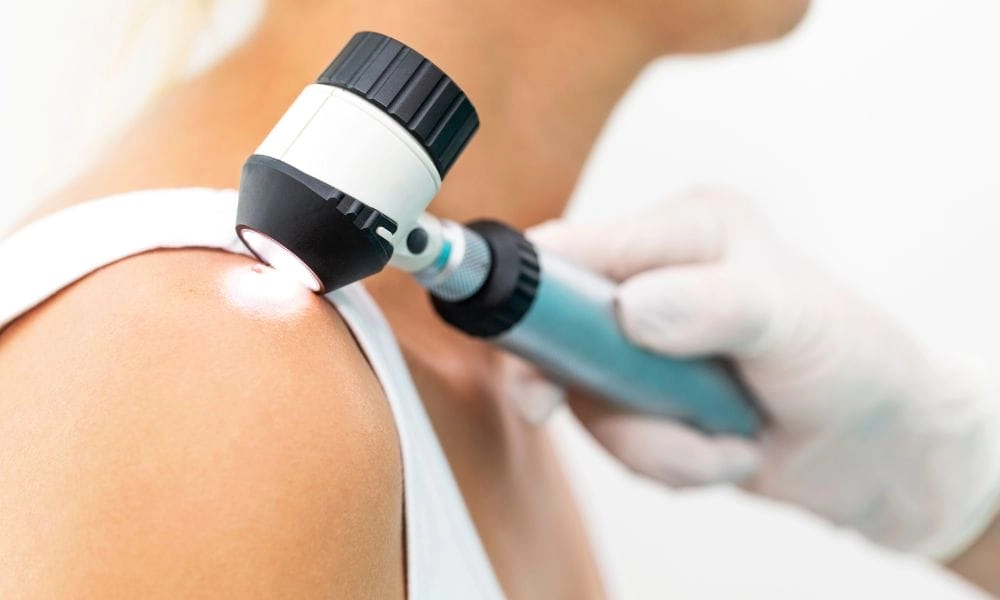
The first step in suspecting skin cancer is to have discovered an abnormal or changing mole, spot, sore or nodule somewhere on the body. Although not all skin changes result in cancer, it is important to schedule a visit to the doctor when a concern arises.
Risk Factors
Risk factors that have been found to increase the propensity for skin cancer include:
Being a fair-skinned person: As they have less melanin, they are more susceptible to severe UV radiation damage.
Enduring sunburns constantly: Blisters and sunburns increase the development of skin cancer in exposed areas.
Severe exposure to the sun without protection.
Having many moles.
Having suffered from precancerous skin lesions.
Having a family history of skin cancer.
Having a weak immune system due to other diseases.
Exposure to radiation or other hazardous substances (e.g. arsenic).
Prevention
¿Cómo prevenir el cáncer de piel?
Skin cancer can be prevented by adopting simple habits, among them:
Avoid sunlight during the strongest hours (10:00 am to 04:00 pm).
Apply sunscreen to your skin every day.
Wear clothing that covers a large part of the skin.
Eliminate the use of sunbeds or tanning beds.
Check your skin and consult your doctor for any changes.
Skin cancer treatments
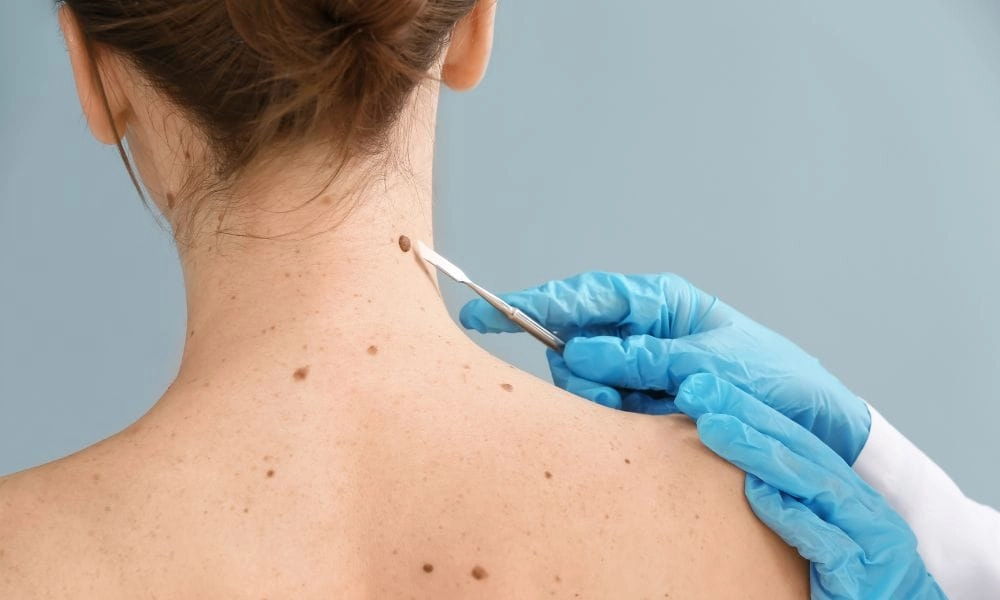
Skin cancer has multiple treatment options depending on its location, size, type and depth; the most frequent is biopsy, with which the physician can completely remove the lesioned area.
However, some complex cases may require the application of other treatment methods, for example: freezing with liquid nitrogen, surgery, curettage and electrodesiccation, radiotherapy, chemotherapy, biological therapy, photodynamic therapy, among others.
Complications
The most worrisome scenario that can arise in a skin cancer patient after treatment is:
Skin cancer may spread and metastasize to other organs.
That the treatment leaves sequelae due to associated side effects.