Small Intestine Cancer
Small bowel cancer is a rare disease that originates in the tissues of the small intestine, which is the part of the digestive system that connects the stomach to the large intestine.
Innovative Therapeutic Strategies for Small Intestine Cancer
Our contemporary approach seeks to maximize therapeutic efficacy while minimizing side effects. From targeted therapies based on specific genetic profiles to advances in immunotherapy and targeted radiotherapy, you will find it all at Panama Cancer Clinic.

Small bowel cancer accounts for approximately 3% of all gastrointestinal cancers.

Although small bowel cancer is rare, its incidence has been increasing in recent decades.

Diagnosis and Staging
Timely identification of the disease and thorough assessment of its extent allow us to design personalized therapeutic strategies and optimize treatment results.

General Welfare
Through individualized therapy, support groups and specialized resources, we seek to accompany our patients on their journey to recovery.

The Specialist
The multidisciplinary approach of our specialists expands the frontiers of oncology treatment, providing hope and quality of life to those affected by this disease.
What is small bowel cancer?
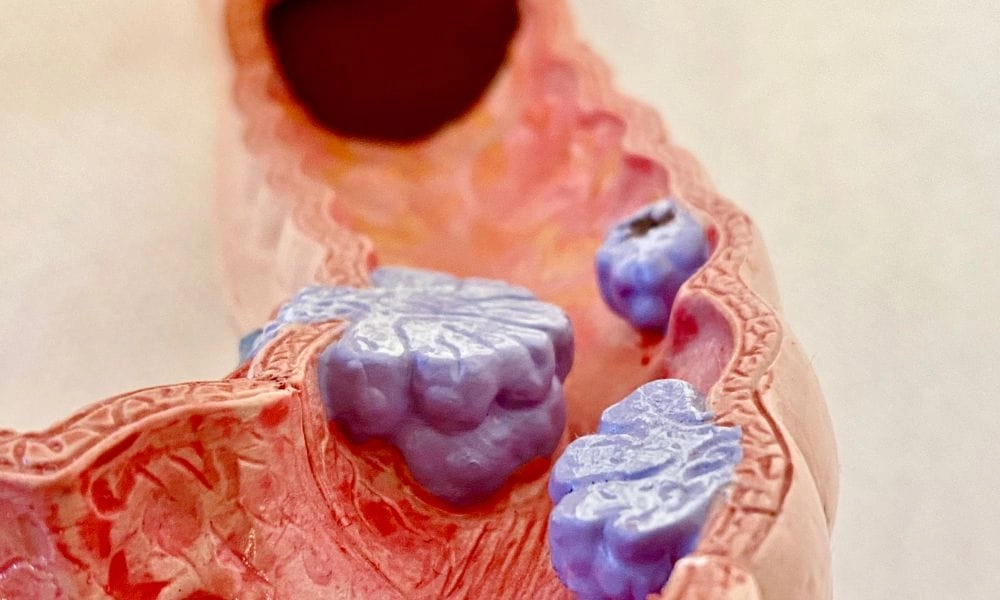
Small intestine cancer refers to the formation of cancer cells in the tissues of the small intestine. These malignant cells can grow and spread throughout the mucosa, muscle layer and other layers of the small intestine.
Types of small bowel cancer
Among the main types of small bowel cancer are:
Adenocarcinoma:
This is the most common type of small bowel cancer. It originates in the cells that line the small intestine and can occur anywhere in this area.
Lymphoma:
Small intestinal lymphoma is a type of cancer that affects the lymphatic system in the small intestine. It can develop in any part of the small intestine and is often associated with celiac disease.
Sarcoma:
Small bowel sarcomas originate in the supporting tissues, such as the muscles, blood vessels or connective tissues of the small bowel. This type of cancer is less common than adenocarcinoma.
Carcinoid tumors:
These tumors originate in the neuroendocrine cells of the small intestine and can secrete hormones that cause characteristic symptoms, such as carcinoid syndrome.
Symptoms of small bowel cancer
Symptoms of small bowel cancer may include:
Abdominal pain.
Gastrointestinal bleeding.
Intestinal obstruction.
Unexplained weight loss.
Changes in bowel habits.
It is important to note that these symptoms can be nonspecific and vary from person to person.
Contact us at
. Schedule an appointment
Request a consultation

Risk Factors
Some risk factors for small bowel cancer are:
Family history of colorectal cancer.
Uncontrolled celiac disease.
Crohn's disease.
Whipple's disease.
Previous radiotherapy in the abdominal region.
Screening tests
The diagnosis of small bowel cancer involves the screening tests mentioned below:
Imaging Tests
Tests such as computed tomography (CT), magnetic resonance imaging (MRI) and positron emission tomography (PET) are used to create detailed images of the small intestine and look for signs of cancer.
Endoscopy
Endoscopy allows visualization of the interior of the small intestine and biopsies of any suspicious areas.
Radiographs with Barium
These tests involve drinking a solution containing barium, which facilitates detailed visualization of the small intestine on X-rays.
Nuclear Medicine Tests
These advanced tests use a radioactive tracer to enhance images of the small intestine.
Treatments for small intestine cancer
It is important that oncologic treatment be personalized for each patient as a unique individual. In this sense, it could include one or more of the following options:
Surgery
Surgery is the main treatment when resection is possible. The aim is to remove the tumor and any surrounding affected tissue.
Radiation Therapy
Radiation therapy is commonly used to destroy cancer cells or reduce their size prior to surgery, or as the primary treatment to control cancer growth.


Chemotherapy
Chemotherapy is usually administered before or after surgery, although it can also be used as the main treatment to destroy cancer cells.
Targeted therapy
This approach uses drugs that specifically target the unique characteristics of cancer cells, which can reduce side effects compared to conventional chemotherapy.
Prevention
To reduce the risk of small bowel cancer, it is recommended:
Maintain a healthy weight.
Follow a balanced diet rich in fiber.
Limit alcohol consumption and do not smoke.
Undergo regular medical examinations.