Throat Cancer in Panama
Throat cancer is a relatively common disease, where most cases begin in the glottis (part containing the vocal cords) or in the supraglottic area (above the vocal cords).
REQUEST A CONSULTATIONEarly and appropriate treatment improves chances of survival
By detecting throat cancer in its early stages, when it is more localized and has not spread to other parts of the body, more effective and less invasive treatments can be applied. Panama Cancer Clinic's multidisciplinary team will be your guide at all times.

About 60% of laryngeal cancer cases start in the glottis, while approximately 35% develop in the supraglottic area.

Early detection of throat cancer also involves being aware of possible risk factors such as tobacco and alcohol use.

Diagnosis and Staging
Once throat cancer is diagnosed, its stage or grade is determined. The stage of the cancer describes the number of malignant cells present in the body, helping us determine the best treatment options.

General Welfare
The psychological support we provide helps the patient cope with the emotional and psychological challenges that arise during treatment and recovery.

The Specialist
Receiving treatment from our oncology specialists guarantees you a comprehensive, specialized and up-to-date approach to the treatment of throat cancer.
What is throat cancer?
Throat cancer is a type of neoplasm that develops in the throat, specifically in the pharynx or larynx. The pharynx is the muscular tube behind the nose and mouth, extending into the esophagus. The larynx, on the other hand, is located in the upper part of the trachea and contains the vocal cords.
Types of throat cancer
There are several main types of throat cancer, depending on the part of the throat where the cancer cells form:
Laryngeal or glottic cancer
It begins in the vocal cords and other structures of the larynx such as cartilage. It accounts for about 33% of throat cancer cases.
Oropharyngeal cancer
It affects the back of the oral cavity, including the base of the tongue and tonsils. Approximately 30% of throat cancer cases correspond to this type.
Nasopharyngeal cancer
It originates in the nasal cavity and upper throat behind the nose. It is less common and accounts for only about 2% of cases.
Hypopharyngeal cancer
It forms in the hypopharynx (lower part of the throat behind the tongue). It accounts for 20% to 25% of throat cancer cases.
Most of these types of throat cancer begin as squamous cell carcinoma, where cancer forms in the flat cells that line the pharynx and larynx.
Symptoms of throat cancer
Persistent sore throat.
Voice changes.
Difficulty in swallowing.
Discomfort or pain when swallowing.
Swollen lymph nodes or swelling in the neck.
Weight loss without apparent cause.
Ulcers or masses in the neck or mouth that do not heal.
Sensation of blockage in the throat.
Recurrent cough or bleeding when coughing.
Contact us at
. Schedule an appointment
Request a consultation

Risk Factors
The main risk factors for throat cancer are:
Tobacco use:
Cigarette or cigar smoking is the most important risk factor for throat cancer, responsible for about 75% of cases.
Excessive alcohol consumption:
Drinking alcohol in excess, especially distilled beverages, also increases the risk of throat cancer. Alcohol and tobacco may have a synergistic effect that further increases the risk.
HPV infection:
Certain types of human papillomavirus (HPV) have been associated with 60-95% of cases of throat cancer, especially oropharyngeal.
Environmental and occupational exposure:
Exposure to asbestos, silica sand and other industrial chemicals and irritants increases the likelihood of throat cancer.
Screening tests
The diagnosis of throat cancer involves several methods and tests to determine the presence and extent of the cancer. Among them we can mention:
Physical examination and medical history
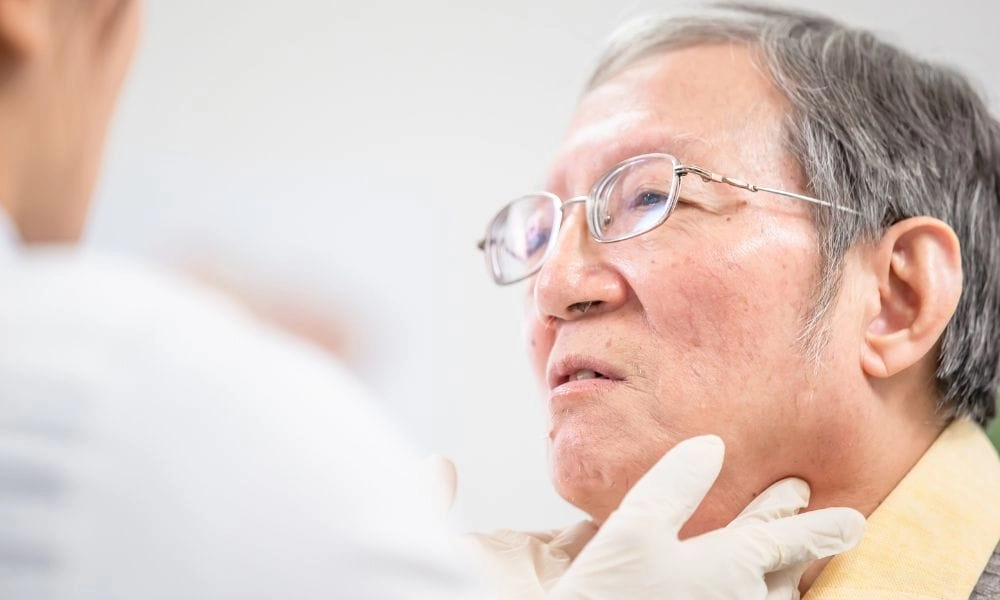
The oncologist performs a thorough examination of the head and neck, paying attention to any signs of cancer in the mouth and throat, as well as swollen lymph nodes in the neck.
Laryngoscopy
In some cases, laryngoscopy may be performed to examine the inside of the larynx and hypopharynx.
Imaging tests
Imaging tests such as computed tomography, magnetic resonance imaging and positron emission tomography help determine the extent of the cancer beyond the surface of the throat.
Biopsy
A biopsy is a procedure in which a tissue sample is removed for laboratory analysis. Pathologists will examine the sample for signs of cancer and may also test it for the presence of human papillomavirus (HPV), which affects treatment options for certain types of throat cancer.
Throat cancer treatments
Treatments for throat cancer vary depending on the type and stage of the cancer, as well as the patient's individual needs. Options generally include:
Surgery
Surgery may be used to remove the tumor and surrounding affected tissues. Depending on the location and stage of the cancer, it may involve partial or total removal of the larynx (laryngectomy), pharynx (pharyngectomy) or other affected structures.
Radiation Therapy
Radiation therapy uses high-energy radiation to destroy cancer cells and shrink the tumor. It can be used as the main treatment or in combination with surgery and/or chemotherapy.
Chemotherapy
Chemotherapy uses drugs to destroy cancer cells throughout the body. It may be given before surgery or radiation therapy to reduce the size of the tumor, after surgery to eliminate remaining cancer cells, or in combination with radiation therapy (chemoradiation) to increase the effectiveness of the treatment.
Targeted therapy
Targeted therapy uses drugs that specifically target the unique characteristics of cancer cells. These drugs can block the growth and spread of cancer.
Immunotherapy
Immunotherapy stimulates the body's immune system to recognize and attack cancer cells. It can be used in cases of advanced throat cancer that do not respond to other treatments.
Rehabilitation
After treatment, rehabilitation may be required to help regain the ability to swallow, eat solid food and speak.

How to prevent Throat Cancer?
To prevent throat cancer, the following measures can be taken into account:
Avoid tobacco use.
Limit alcohol intake.
Get the HPV vaccine.
Maintain a healthy diet rich in fresh fruits and vegetables.
Avoid exposure to toxic chemicals.